Ports and free zones, the main arteries of international trade, are massive customs gates where thousands of tons of products enter and exit daily. Cargoes (grain, timber, textiles, food) unloaded from intercontinental ships or waiting to be loaded onto ships are stored in port areas and bonded warehouses. Port authorities are responsible not only for the logistics of the goods but also for the safe (disease-free and pest-free) transfer of those goods to the country or other countries. A dangerous insect species (for example, the Asian longhorned beetle or the Khapra beetle) detected in a cargo arriving from abroad during customs inspections causes the cargo to be immediately quarantined. This situation means the locking up of port traffic, the occupation of bonded warehouses, and the importing company suffering great losses. The biggest weapon used by port operations to overcome such crises is "Port Fumigation". In this article, we will discuss the critical role and operational functioning of quarantine fumigation applied in ports.
Quarantine Risks Encountered in Ports
Ports are the ground zero where "invasive alien species" enter a country. Pest risks in the port area are two-way:
- Import Risk (Incoming Cargo): Insects hiding in timber or agricultural products carried by ships arriving from another continent (for example, South America or the Far East) have the potential to spread to the local ecosystem the moment the cargo is opened at the port. When Ministry of Agriculture officials detect insects in such cargoes, they do not allow the goods to be nationalized (cleared through customs) and issue an emergency fumigation order.
- Export Risk (Outgoing Cargo): Products to be exported from our country or their wooden packaging (due to the ISPM-15 standard) must be cleared of pests (fumigated) before being loaded onto the ship at the port. Otherwise, the receiving country will not accept the goods at its port.
Fumigation Operations in Port Operations
Port areas are extremely dynamic, windy, and dangerous areas where heavy machinery operates constantly. Therefore, port fumigation is carried out with very strict security protocols (Port Security):
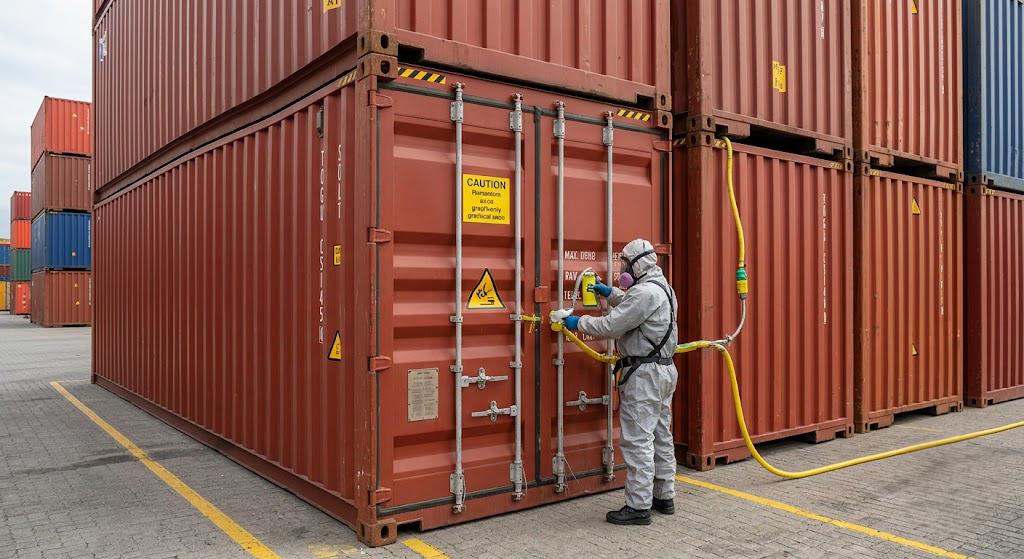
- Container Fumigation: Export or import containers are towed to a specially designated "Fumigation Pad" within the port. Doors and ventilation holes are completely isolated, and gas is introduced. The container is kept here in quarantine for 48-72 hours, then ventilated, and the customs process is completed.
- Open Field Bulk Fumigation: Thousands of tons of products such as bulk grain or coal discharged from the ship are covered with massive tarpaulins in the port area and gassed using the tent fumigation method.
- Bonded Warehouse and Silo Fumigation: Large enclosed warehouses and wheat silos within the port are completely isolated while the products are inside and are volumetrically gassed.
- On-Board Fumigation: The holds of ships in transit or those that have completed their loading are boarded right before the ship departs, and fumigants that will work while cruising (in-transit) are placed.
Speed and Reliability in International Trade
The concept of time is very valuable in ports. Every extra day a ship waits in port means thousands of dollars in demurrage penalties. Therefore, it is of vital importance that the company performing port fumigation masters customs legislation, can work in coordination with the Ministry of Agriculture, and has the capacity for emergency response (24/7). The Gas Free Certificate (Fumigation Certificate) to be issued after the process is the key for the cargo to enter free circulation.
Conclusion
While port operations ensure the rapid flow of global trade, they must also ensure biological security at the same time. A potential insect infestation or quarantine crisis that may occur in the port area brings both the reputation of the enterprise and commercial operations to a standstill. A professional port fumigation service that is fast, reliable, and fully compliant with international (IMO and ISPM-15) standards is the most important logistical support that ensures your cargoes reach their destination countries safely and quickly without getting stuck at customs.